clashcircle44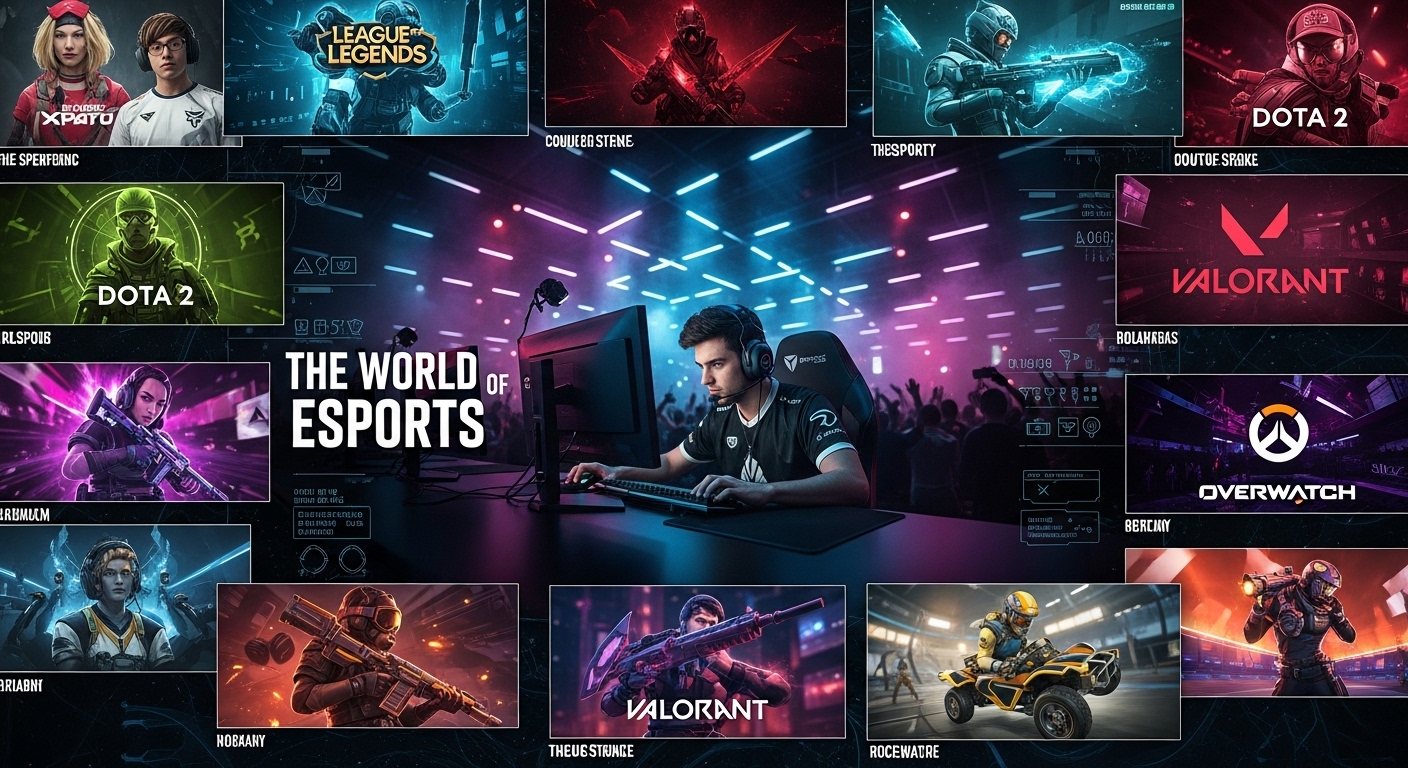
Introduction: The New Arena
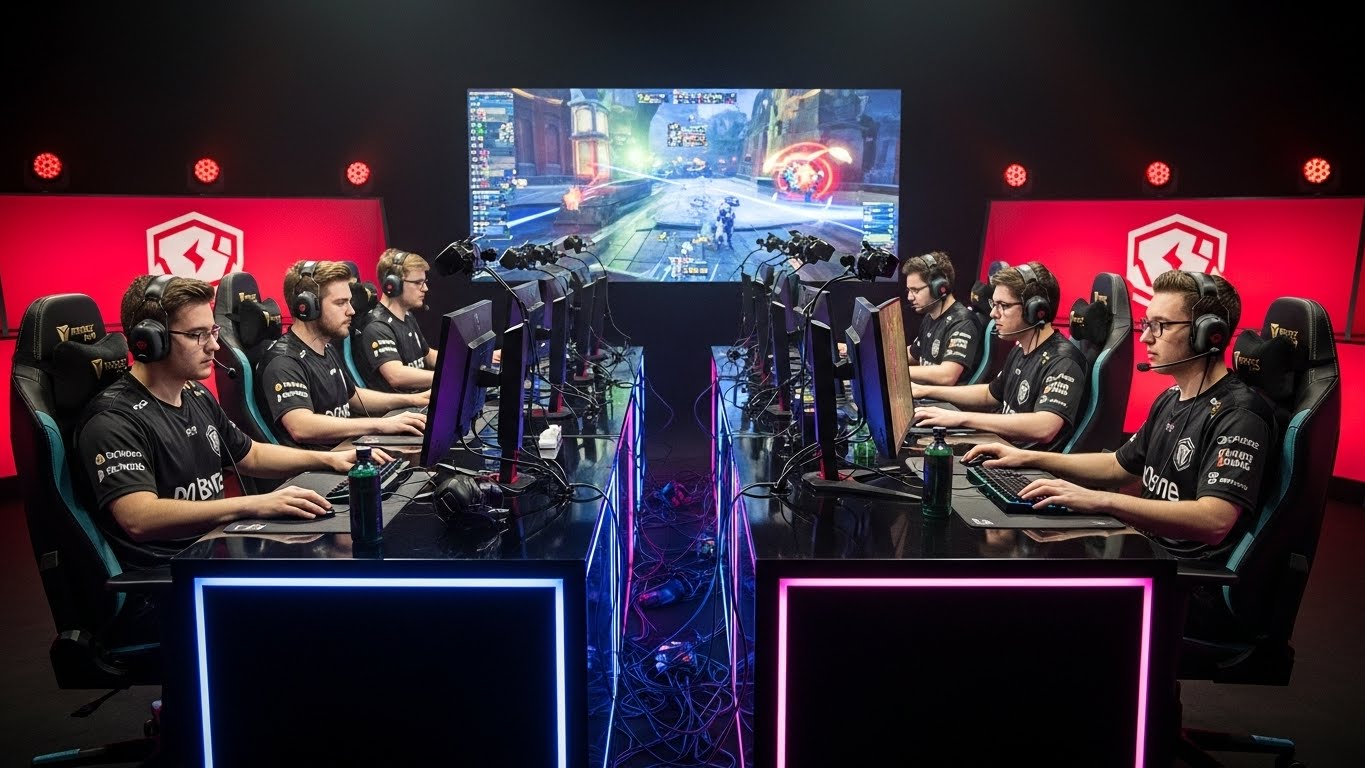
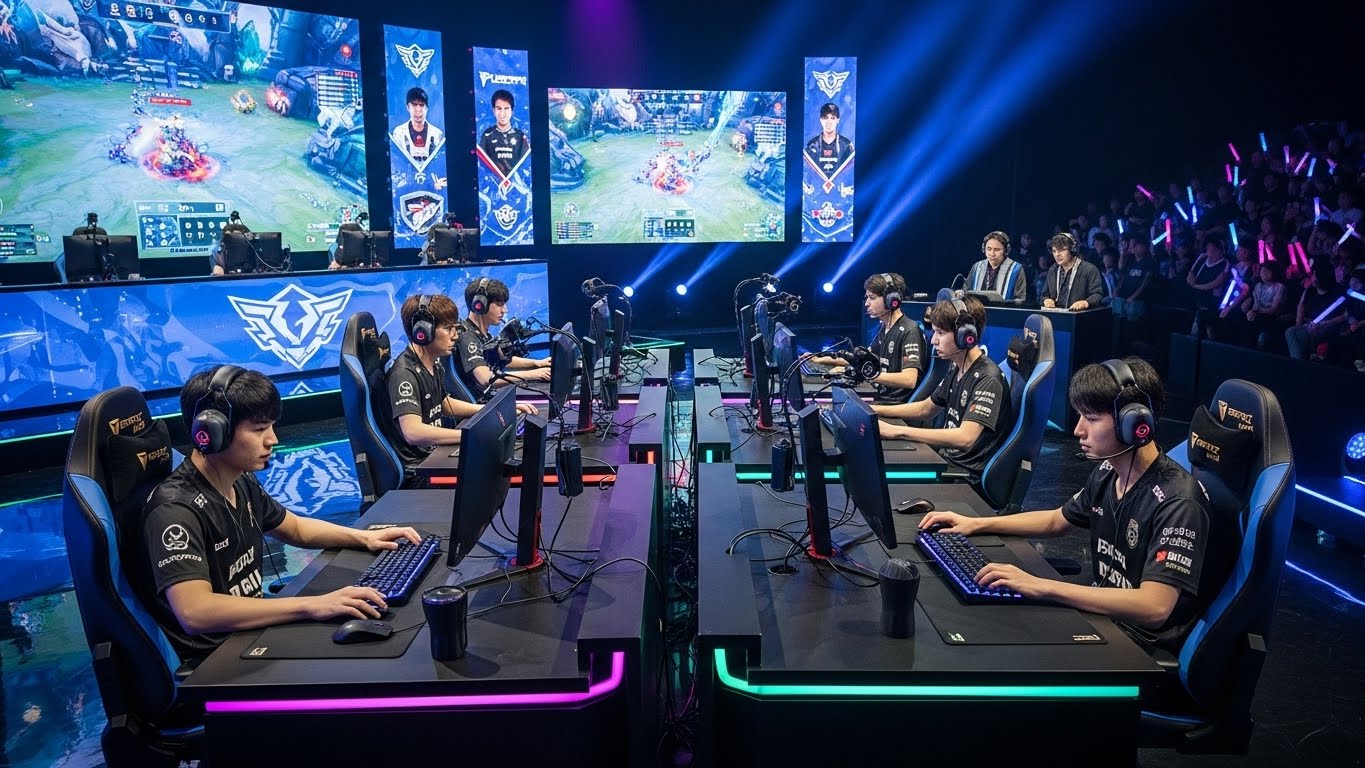
In a little over two decades, competitive gaming has transformed from basement LAN parties into a global spectacle. What was once a niche hobby is now a multibillion-dollar industry, with professional teams, massive prize pools, and fans tuning in from every corner of the globe. This world is known as esports — where players, strategies, and spectacle collide in virtual arenas. In this post, we’ll journey through the evolution of esports, examine the challenges it faces, celebrate its successes, and explore what the future might hold.
Origins of Competitive Gaming
Before the term “esports” existed, dedicated gamers were already pitting themselves against each other in early video game competitions. Arcades of the 1980s held high-score battles. In the 1990s and early 2000s, PC titles like Quake, Counter‑Strike, and Warcraft III became early competitive staples. LAN parties and grassroots tournaments were where talent was nurtured.
As the internet matured, online matchmaking and competitive ladders allowed players to test their skills beyond local confines. Game developers began to see opportunity and started supporting tournaments, leagues, and spectator modes. Over time, infrastructure, audience interest, and investment built the foundations for what we now recognize as modern esports.
The Pillars of Esports
Esports doesn’t rest on a single pillar but on the interplay of several:
1. The Players and Teams
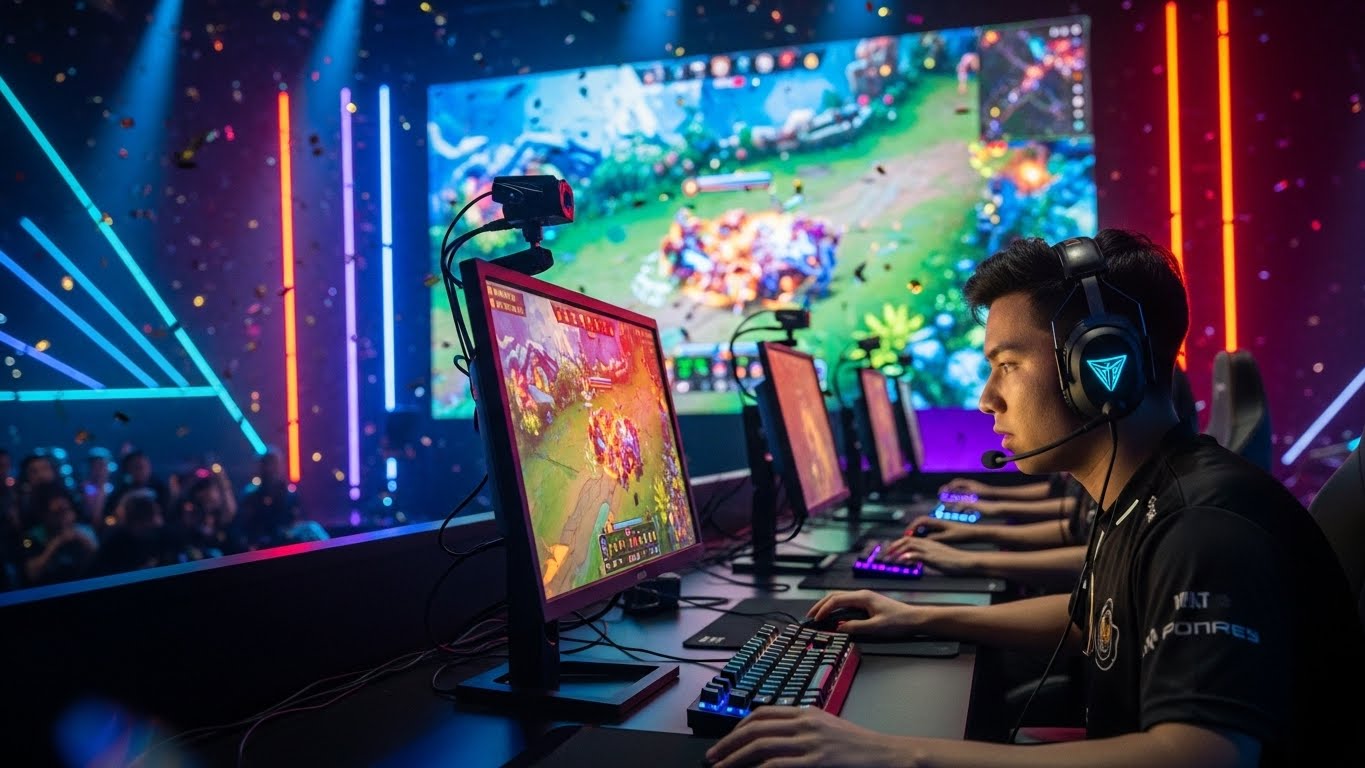
At its heart, esports is about the players. The best among them dedicate themselves fully: rigorous training, coaching, physical fitness, psychological resilience, and strategic thinking. Many top players become celebrities, with followers, endorsements, streaming channels, and social media presence.
Teams provide structure: recruiting talent, offering support services (nutritionists, psychologists, analysts), forging partnerships, and managing branding. Top-tier organizations often operate much like traditional sports franchises.
2. Games and Publishers
A unique aspect of esports is that the “sport” is owned by a game publisher (e.g. Riot Games, Valve, Activision Blizzard). That gives publishers considerable control over game updates, competitive rules, balance changes, and licensing. Their decisions can make or break a competitive scene.
Choosing which games to support, which tournaments to sanction, and how to regulate them is pivotal for healthy ecosystem growth.
3. Leagues, Events & Production
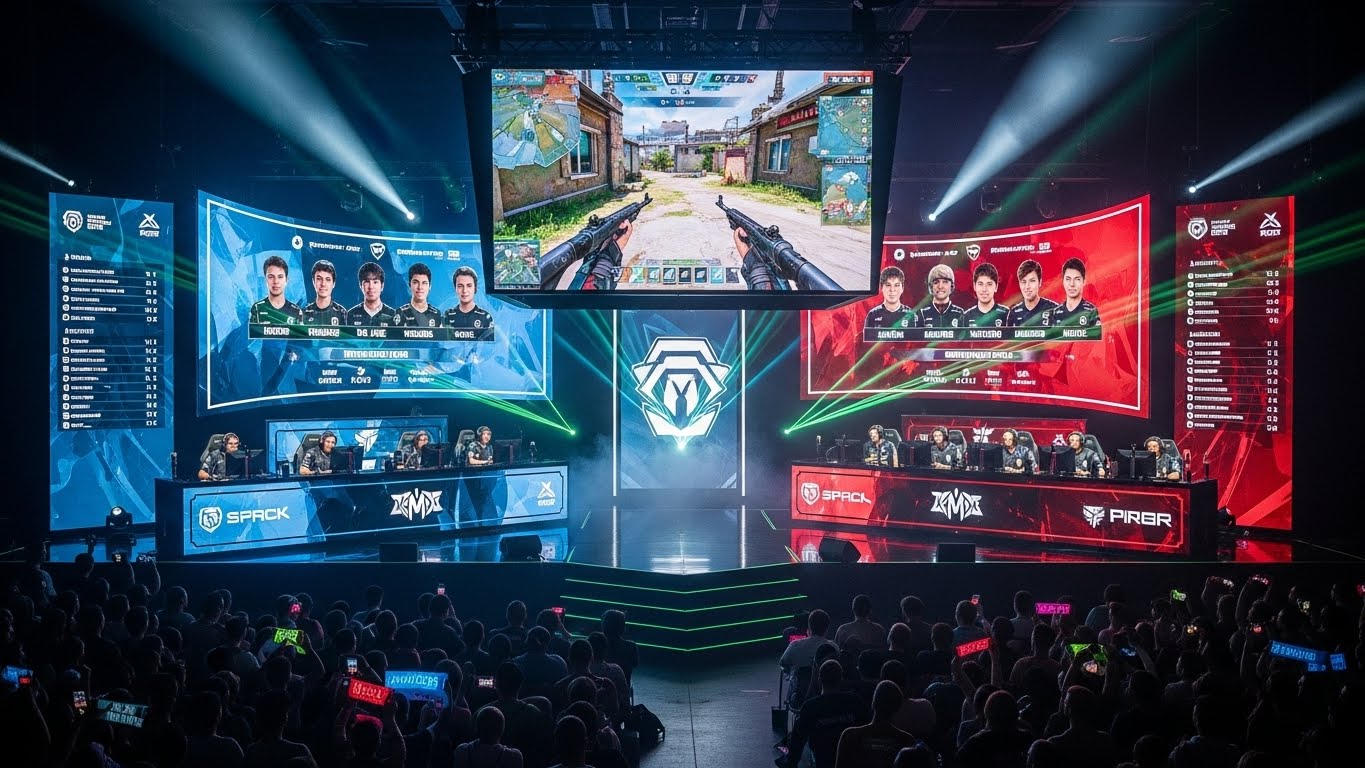
Organizing tournaments — whether regional leagues, global championships, or invitational events — is the backbone of the ecosystem. Events must deliver not only high-stakes competition, but also spectacle: stages, broadcasting, casters, production value, audience engagement, and broadcast platforms.
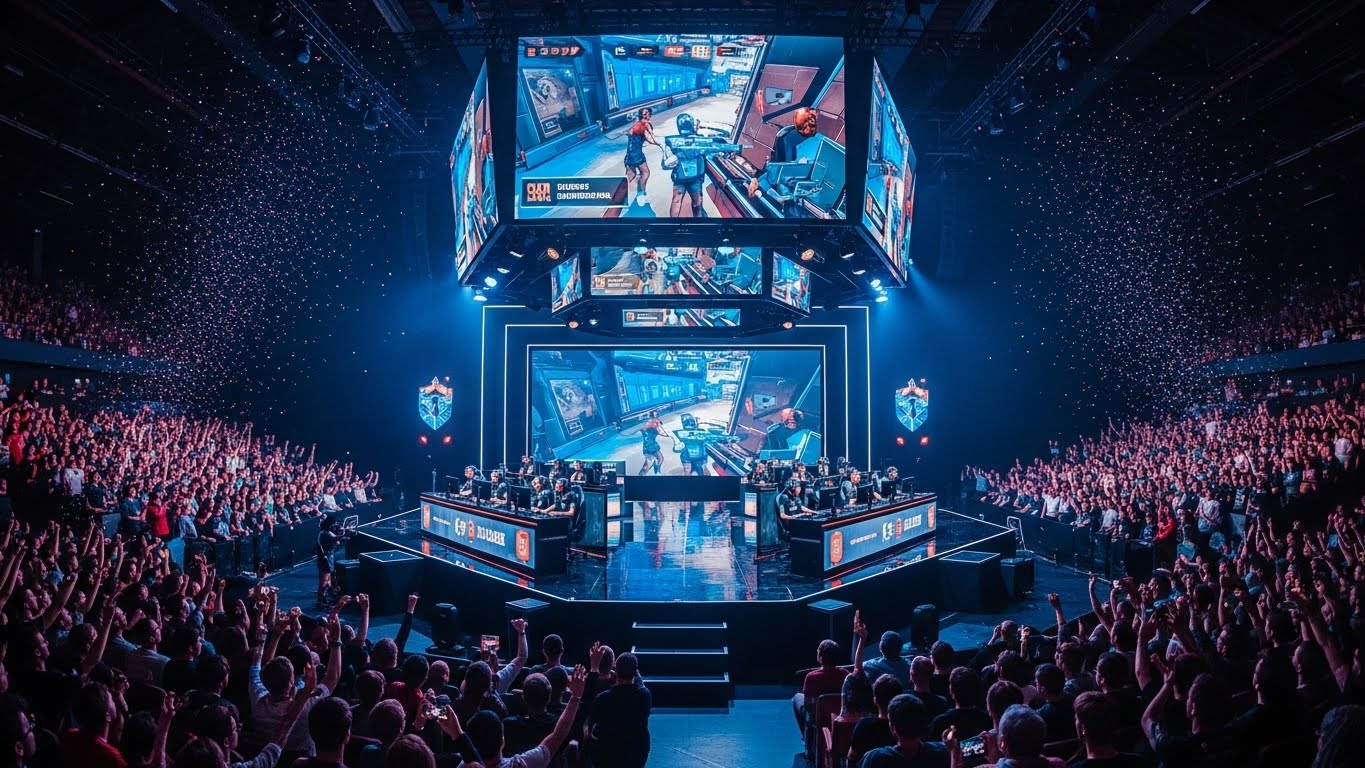
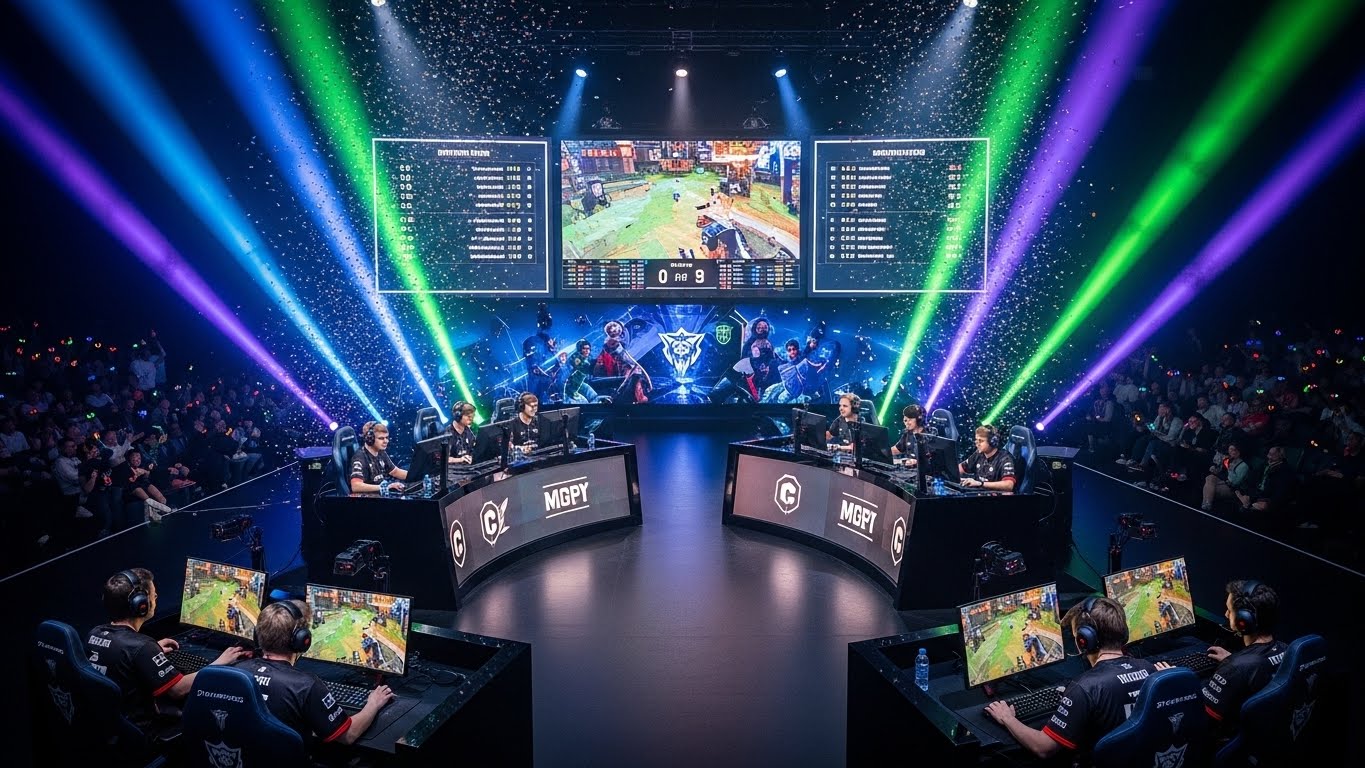
Major events often fill arenas or stadiums, blending the feel of traditional sports with audiovisual flair.
4. Viewers and Community
Spectators are critical. Their attention, loyalty, and engagement are what make esports viable. Fan communities congregate in chat rooms, forums, social media, and live events. Streamers, influencers, analytical content creators, and commentators all contribute to the wider culture.
Monetization of viewers comes via advertising, sponsorships, media rights, merchandise, ticket sales, and subscriptions.
5. Supporting Infrastructure
Beneath the spectacle is an ecosystem: tournament organizers, broadcasting platforms, analytics firms, coaching and training systems, hardware manufacturers, and data companies. All these contributors work together to support the visible parts of esports.
Milestones & Breakthroughs
Over the years, esports has hit several pivotal moments:
- Massive prize pools: Events such as The International (for Dota 2) have offered tens of millions of dollars in total prize money, raising the stakes and attention globally.
- Broadcasting to the masses: Platforms like Twitch, YouTube, and now specialized esports broadcast services have enabled millions to watch live worldwide.
- Arena events with fans: Once tournaments were purely online. Today, esports finals fill arenas, much like football or basketball matches.
- Mainstream sponsorships: Brands outside the gaming sphere — sports companies, consumer goods, automotive, apparel — have increasingly entered the space.
- Institutional support: Universities offering scholarships for esports players, national-level federations recognizing competitive gaming, and even the prospect of an Olympic Esports Games on the horizon.
These milestones highlight how far esports has come — and the possibilities still ahead.
The Challenges Behind the Glamour
Behind the flashy tournaments and star players lie serious challenges that the industry must navigate.
Game Lifespan & Balance Changes
Because games are digital products updated continuously, balancing patches or major updates can drastically alter competitive viability. A patch can make a formerly dominant strategy obsolete overnight, or cause frustration among pro players. This dynamic nature adds uncertainty and risk to the ecosystem.
Financial Sustainability
While top-tier tournaments and teams may rake in revenue, many smaller organizations and players struggle. Reliance on prize money, short sponsorship cycles, and high operational costs (travel, production, staffing) can strain finances.
Ecosystem Fragmentation and Stability
Multiple game titles, overlapping tournaments, and varied rules can lead to fragmentation. Moreover, some leagues are closed systems (no relegation), while others promote movement between tiers. Achieving consistency and predictability is hard.
Regulation and Governance
Because ownership lies with game companies, independent governance is limited. Questions around fairness, match-fixing, doping, player rights, and contracts often lack comprehensive oversight. Ensuring accountability, transparency, and player protection requires more robust systems.
Player Well‑Being & Mental Health
The demands on top players are grueling: long training hours, stress, burnout, travel fatigue, public scrutiny, and performance pressure. Mental health and physical well-being can suffer. Support systems like coaching, counseling, and rest periods are essential but not always adequately provided.
Accessibility & Inclusion
Gender diversity, cultural representation, and equitable access remain issues. Some regions lack infrastructure or funding. Barriers to entry and recognition for underrepresented groups hamper inclusivity.
Success Stories to Inspire
Despite the challenges, many stories reflect the strength and promise of esports.
- A gamer from a region with limited infrastructure climbs to global heights through talent, perseverance, and wise support.
- An underdog team upsets established giants on the world stage, inspiring fans.
- Emerging esports hubs in countries previously not known for gaming produce standout players or teams.
- Universities offer full scholarships for esports, turning competitive gaming into viable career paths.
These tales reinforce that potential is not limited by geography if passion, support, and opportunity align.
The Role of Data, Biofeedback & Analytics
A newer frontier in esports is the use of sensors and analytics to understand player performance not only in-game, but physiologically.
Researchers have collected biometric data — heart rate, skin conductance, motion, eye movement — during gameplay to analyze stress responses, concentration levels, and performance under pressure. One dataset involving professional and amateur League of Legends players recorded multiple sensor streams over many hours. It revealed that stress and concentration were less correlated in professionals compared to amateurs, suggesting more consistent performance under pressure. This work helps in creating better training regimens, understanding fatigue cycles, and optimizing preparation.
Further studies have involved collecting sensor data from the chair (accelerometers, gyroscopes) during games like CS:GO to detect behavior patterns. Machine learning models applied to such data can identify player style or performance traits. These analytics-driven approaches signal a shift — esports is evolving into a domain where physiology, psychology, and digital skill all merge.
Paths & Careers Within Esports
You don’t have to be a star player to work in esports. The ecosystem offers a wide range of roles:
- Coach / Analyst / Strategist: Guiding players, studying opponents, and developing tactics.
- Content Creator / Caster / Commentator: Broadcasting, storytelling, and engaging audiences.
- Event Organizer / Production Specialist: Building the shows, managing logistics, broadcasting, and technical setup.
- Marketing / Sponsorship Lead: Bridging brands with esports, securing partnerships, and managing community engagement.
- Business & Operations: Running team finances, HR, legal compliance, contracts, and expansion strategies.
- Data Scientist / Stat Analyst: Working with match data, player metrics, predictive models, and performance optimization.
- Game Developer / Balance Designer: For publishers or studios — designing competitive mechanics, patches, and features conducive to esports.
Many roles intersect. Even if you begin in one area, growth may lead to hybrid responsibilities. Importantly, passion for games combined with professional skill in communication, planning, analysis, or production often matters more than merely gaming ability.
The Global Spread & Regional Growth
Esports has matured in regions like North America, Europe, East Asia, and South Korea. South Korea is often cited as the birthplace of modern esports culture: intense fandom, celebrity pro players, TV broadcasts, professional gaming houses, and large stadium events.
But in recent years, emerging regions are making their mark:
- Southeast Asia, India, Latin America, and parts of the Middle East and Africa are seeing rapid growth. Lower barriers to entry (mobile gaming especially) and rising internet penetration help.
- Local tournaments, grassroots leagues, and regional orgs are creating pathways for talent.
- Some nations are centralizing esports in school or university programs.
- Investments in infrastructure, internet speed, and gaming cafes (PC bangs) support competitive opportunities.
These regional growth stories point to a future where the next big pro team or champion might come from a place previously overlooked.
The Future Outlook: Where Esports is Headed
What lies ahead for this still-evolving industry? Several trends suggest exciting possibilities.
Hybrid & Immersive Events
Expect more augmented reality (AR) or mixed-stage broadcasts where virtual effects merge with real-world stages. Immersive experiences, audience interactivity, and spectacle can blur lines between the digital and physical.
Cross-Media Expansion
Esports is increasingly intersecting with entertainment: music, dance, cosplay, film, fashion. Leagues may produce docuseries, reality shows, and esports-themed storytelling to expand reach.
Further Institutional Integration
Esports gaining recognition in academic, governmental, and sports institutions will continue. National federations might regulate competitive gaming. Esports scholarships, varsity programs, and national esports leagues may standardize. One long-discussed goal is inclusion in multi-sport events like the Olympics (the inaugural Olympic Esports Games has been proposed).
AI, Simulation & Training Tools
Machine learning tools will increasingly aid training: opponent simulation, decision support, personal performance coaching, and biomechanical feedback. AI opponents might help prepare under novel strategies or mimic high-level play styles.
Sustainability & Ethical Models
To sustain growth, ethical practices, transparency, long-term contracts, revenue sharing, and welfare models for players must improve. Avoiding boom-and-bust cycles will be key.
Decentralization & Community-Driven Esports
Blockchain, NFTs, and decentralized platforms may introduce new models for ownership, fan engagement, tournament organization, and revenue distribution. Community-driven leagues might emerge beyond publisher-controlled frameworks.
How to Enter & Thrive in the Esports World
If esports calls to you, what steps help you begin and persist?
- Pick a Focus
Don’t try to do everything. Whether you want to create content, coach, broadcast, analyze, or manage — choose a role and build skills around it. - Build a Presence
Create content: streams, write-ups, video breakdowns, or social media analysis. Authenticity and consistency matter more than perfection. - Network
Connect with teams, orgs, players, event organizers, local communities. Contribute, volunteer at events, assist smaller tournaments. Relationships matter deeply in this industry. - Develop Transferable Skills
Communication, project management, video editing, analytics, public speaking, negotiation — these are assets in esports roles. - Stay Adaptable
The industry changes fast. Games fall in and out of favor. Be open to learning new titles, roles, or technologies. - Focus on Health & Balance
Protect your mental and physical well‑being. Esports success is often a marathon, not a sprint. Rest, set boundaries, and sustain passion. - Seek Mentorship & Feedback
Learn from those ahead. Accept critique, iterate based on experience, and stay curious.
Conclusion: More Than a Game
Esports is not just a passing trend — it’s a new form of competition, entertainment, and culture. It blends digital skill with human performance. It thrives on innovation, community, and spectacle. But to continue growing sustainably, it must address financial models, governance, player welfare, and inclusivity.
We are at an inflection point. The coming decade may redefine how we think about sports, entertainment, and digital identity. The next champion, the next league, the next narrative — they could arise anywhere, from any gamer with grit and vision.
For fans, competitors, creators, or aspiring professionals: the arena awaits.